10-Point Checklist Before Your First Solo Forest Walk
The forest sounds different when there is nobody to talk to. You hear your own boots on the needles, the wind shifting somewhere up in the canopy, a woodpecker working a dead trunk off to the right. For a lot of people that quiet is the whole point. It is also the reason a first solo walk deserves a little more thought than a Saturday stroll with friends.
Not because woods are dangerous places, but because you are the only one making decisions. Nobody else is carrying the spare layer. Nobody else remembers which fork you took forty minutes back. Ten minutes of checking at home buys you a whole day of not worrying, and that is the trade this list is built around.
Start With the Weather, and Not the One Outside Your Window
Your town's forecast is a rumour about the forest. Temperature drops roughly with altitude, cloud sits lower than you expect, and a valley that is calm at nine in the morning can be funnelling wind across a ridge by noon. Before you go, check three things for the area you are actually walking in: rain, wind, and light.
For rain, an animated radar gives you far more than a percentage. Ten minutes of watching the shower pattern tells you whether the front is passing through or settling in for the afternoon. Also glance at how much rain fell yesterday. Wet ground makes roots and rock slabs genuinely slick, and a route that is pleasant in dry weather can be slow and slippery the day after a storm.
For wind, look at gusts rather than averages. Strong gusts mean falling branches, so keep out of old stands of trees and off exposed ridgelines. In summer, add afternoon thunderstorms to the picture in mountain areas; they build fast and are the single best argument for starting early and being down by mid-afternoon.
For light, write down sunset time and subtract an hour. Under a closed canopy, dusk arrives early, and a walk that felt generous at four o'clock can feel like a puzzle at seven.
Navigation You Can Use Without a Signal
Most first solo walks happen on marked trails, and that is exactly right. Pick a route that is waymarked, popular enough that you will see another person every hour or so, and shorter than you think you can manage. Build up later.
Then sort out navigation before you leave the house. Download the map area for offline use and open it once to make sure it has actually saved. Put the phone in airplane mode in the forest; it saves battery and stops the small disappointment of watching the signal flicker. A small power bank in the pack costs you almost nothing in weight and removes the whole question of a dead phone.
Carry a paper map if your route leaves well-marked paths, and know how to read the contour lines for the steep bits. Two habits are worth adopting from the start:
- Photograph the trailhead sign. It usually holds the route name, the waymark colour and a rough map. You will be glad of it at a junction three hours later.
- Note each junction as you pass. Say it out loud if that helps: "left at the big beech." On the way back, the same junction looks entirely different from the other direction.
Someone Should Know Where You Are
This is the cheapest safety measure available, and the one most often skipped. Before you drive off, send one reliable person four pieces of information: where you are parking, the route you plan to walk, when you expect to be back, and what they should do if you are not.
Be specific about the back-up. "If I haven't messaged by six, call me; if I don't answer by half six, call the mountain rescue number for that area." Send the pinned location of the car park rather than a village name. Agree that you will message when you reach the car, and then actually do it, even if the walk was uneventful.
While you still have signal, look up the emergency number that applies where you are walking and the local mountain rescue contact, and save both offline. Numbers and systems differ by country and region, so check the actual area rather than assuming. Last, take note of where your signal disappeared. On the way back, that is where it returns.
Dress for the Walk, Not the Car Park
Standing beside the car in the sun, it is easy to underdress. Twenty minutes later, on a shaded north-facing slope, you will want the layer you left behind. Wear or carry a warm mid-layer even in summer, and put a spare dry base layer in a dry bag. Getting wet is uncomfortable; sitting still in wet clothes at lunch is what actually chills you.
Avoid cotton next to your skin. It holds moisture and stops insulating once damp. Broken-in boots and a decent pair of socks prevent most of the misery people remember from their first solo walk, and a few blister plasters in the pack fix the rest. Add a light rain shell, sun protection, and a hat or gloves if the route goes high.
The small items that earn their place
- A headlamp, with fresh batteries, even on a short day walk
- A whistle on a cord, which carries further than a voice
- Water and a proper snack, not a single biscuit
- A small first aid kit and any personal medication
- A foil emergency blanket, which weighs nothing and gets used more than you would think
Leave No Trace, Without the Lecture
The forest you walk into should look untouched after you leave, and that is mostly a matter of small habits. Pack out everything you bring in, including fruit peel and used tissues; both take far longer to break down than the old advice suggests. Stay on the trail even where it is muddy, because stepping around the wet patch widens the damage to either side.
Keep a generous distance from streams and lakes when you stop for a break, and if you need a toilet stop, dig a small hole well away from water, trails and campsites and carry out the paper. Leave flowers, rocks, feathers and antlers where they are. Do not build cairns or log benches, do not move dead wood for a fire unless fires are permitted and there is a designated spot, and check local rules about dogs, which are often on lead in woods for good reason.
Set a Turn-Around Time, Then Obey It
Decide before you start the exact time you will turn back, and pick a physical landmark as well: a bridge, a fork, a viewpoint. Write both on the map. The hardest skill on a first solo walk is turning around when you feel fine and the summit looks close. Solo, the rules you set at the car park are the only rules there are.
If you get to the turn-around point earlier than expected, great. Turn anyway if light or weather is changing, and remember that the walk back takes roughly as long as the walk out. Arriving at your car in daylight is not a nice bonus; it is the plan.
The Ten-Point Check Before You Go
- Forecast checked for the actual elevation, including rain radar and wind gusts.
- Sunset time noted, with an hour in hand for the return.
- Offline map downloaded and tested; phone charged, power bank packed.
- Paper map and compass if the route leaves marked trails.
- Route, car park and return time sent to a reliable person.
- Local emergency and mountain rescue numbers saved offline.
- Layers, spare dry base layer, rain shell and suitable boots.
- Headlamp, whistle, water, food, first aid and personal medication.
- Leave-no-trace kit ready: bag for rubbish, no fire unless permitted.
- Turn-around time and landmark agreed, and daylight buffer confirmed.
Your first solo walk does not need to be ambitious. A well-marked two-hour loop close to home will teach you more than an epic, and it gives you the chance to notice how much you enjoy your own company in the trees. If you have a health condition that flares with exertion, a quick call to your doctor about walking alone on uneven ground is a sensible step before the first one. Otherwise, run the list, lock the car, and go quietly.
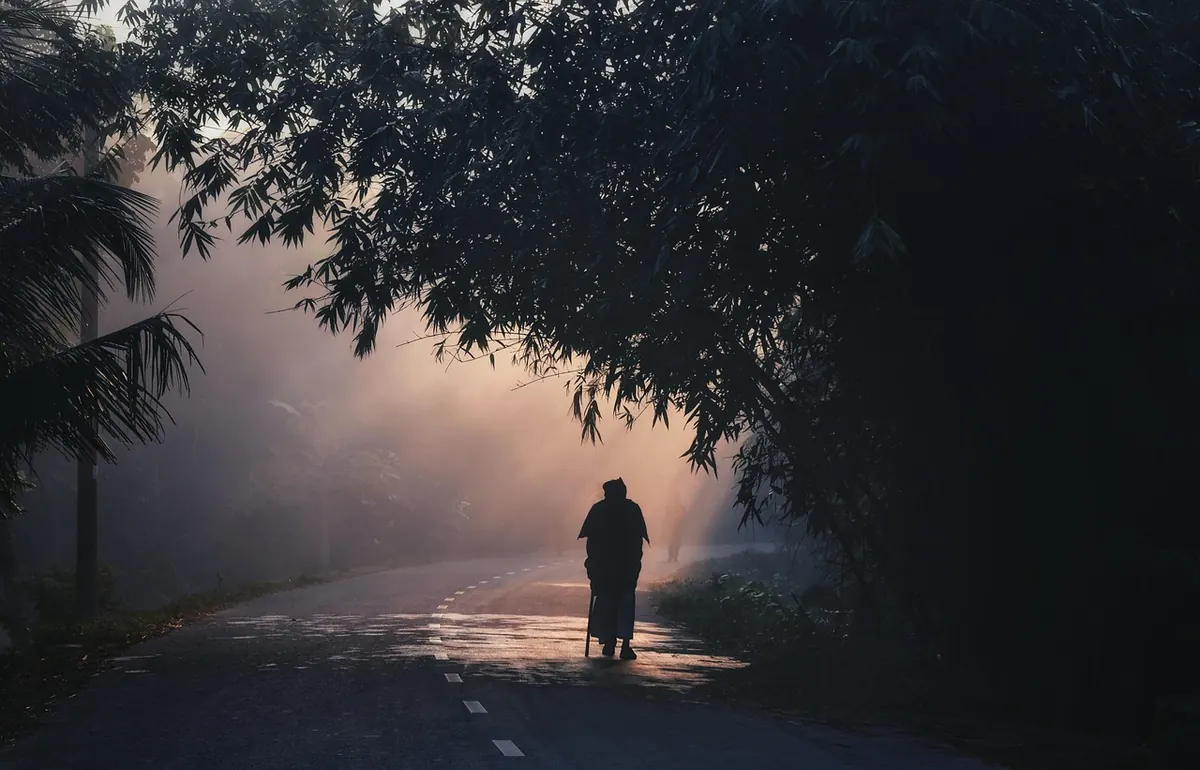
Photo: TamalRoy / Pixabay

How to Season Fallen Wood for Simple Woodland Crafts
A fallen branch can become a spoon, a hook or a walking stick, but only if it dries slowly and properly....

Autumn Leaf Litter: A Field Guide to What It Tells You
What fallen leaves reveal about tree species, soil moisture, fungal decay and the turning season — plus a...