Deciduous vs. Coniferous Forest: What Changes on the Trail
You notice the change before you can name it. One bend of the trail is bright and restless, sunlight flickering through moving leaves; the next is cool, still, and smells of resin. The map shows the same path, the same distance, the same climb. What changed is the company you are keeping: trees that shed their leaves each autumn, or trees that carry their needles through the year. Both make fine walking, and neither is better. But they behave differently underfoot, overhead and across the seasons, and knowing which one you are in changes how you plan the day.
Light and Shade: What the Canopy Does to the Day
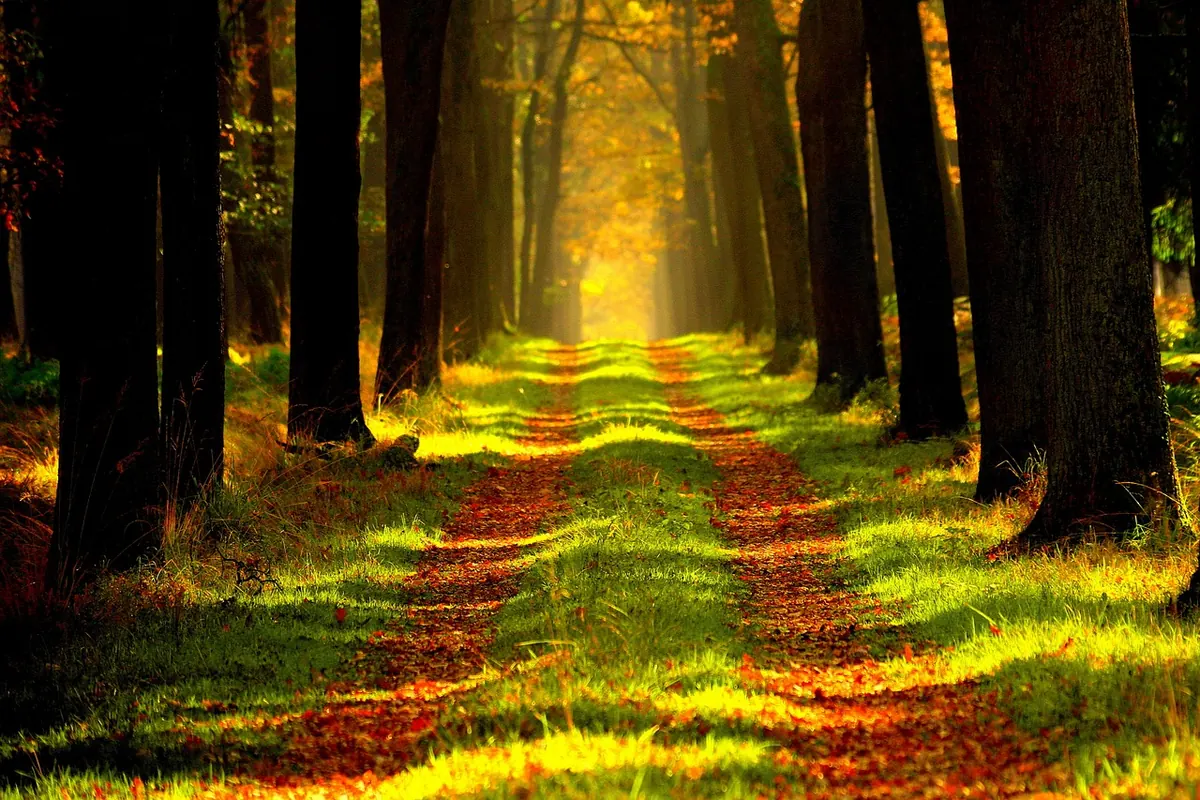
A deciduous wood runs on a calendar. Beech, oak, chestnut, hornbeam — they open late and close early. In April and May the canopy is still thin, light floods the floor, and wood anemones and primroses flower in that narrow window before the leaves arrive. By June the crown has shut, and the light beneath it becomes dappled, shifting, full of movement. Walk the same path in February and the sky is wide open above you, frost on the ground, long views through bare branches.
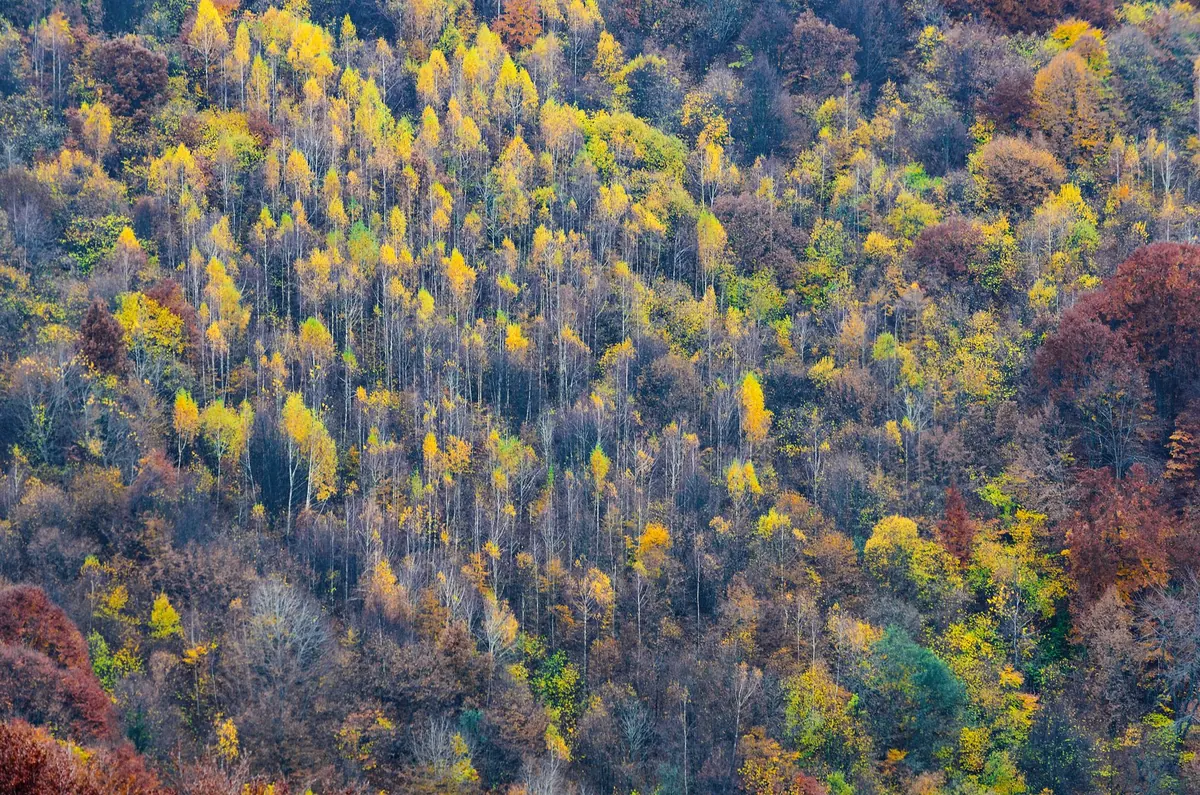
Conifers keep their curtain up all year. Spruce, fir and pine cast a shade that is deeper and steadier, and in a dense stand of spruce it can feel like late afternoon at eleven in the morning. The Italian larch is the exception worth knowing: it is a conifer, but it turns gold in November and drops its needles, so for a few weeks it behaves like a broadleaved tree.
This matters practically. A conifer wood is a good place to walk in high summer — genuinely cool at midday — but it is a poor place to be caught by an early dusk. Under a closed canopy, evening arrives noticeably sooner. If your route spends the last hour in spruce, take the headlamp seriously and set your turnaround earlier than the map suggests.
The Forest Floor Under Your Boots
Broad leaves rot quickly. They hold moisture, break down within a season or two, and build the crumbly dark humus that supports a rich field layer: bramble, hazel, dog's mercury, holly, ferns. That undergrowth has consequences. It hides stones and holes, it soaks your trousers, and it grows over side paths until a single trail becomes three. In chestnut coppice or mixed oak woodland, the ground is busy and uneven, and a misplaced step is easy.
Needles are different. They are acidic and slow to break down, so the field layer under a mature spruce or pine stand is usually sparse — moss, a few ferns, wood sorrel, and not much else. The duff itself is springy and quiet to walk on, which feels pleasant until it isn't. Dry needles on rock or on a smooth forest road roll under a boot like tiny ball bearings. Wet needle mats on a slope are worse. And because the litter is deep and uniform, it covers roots and drainage channels with great efficiency.
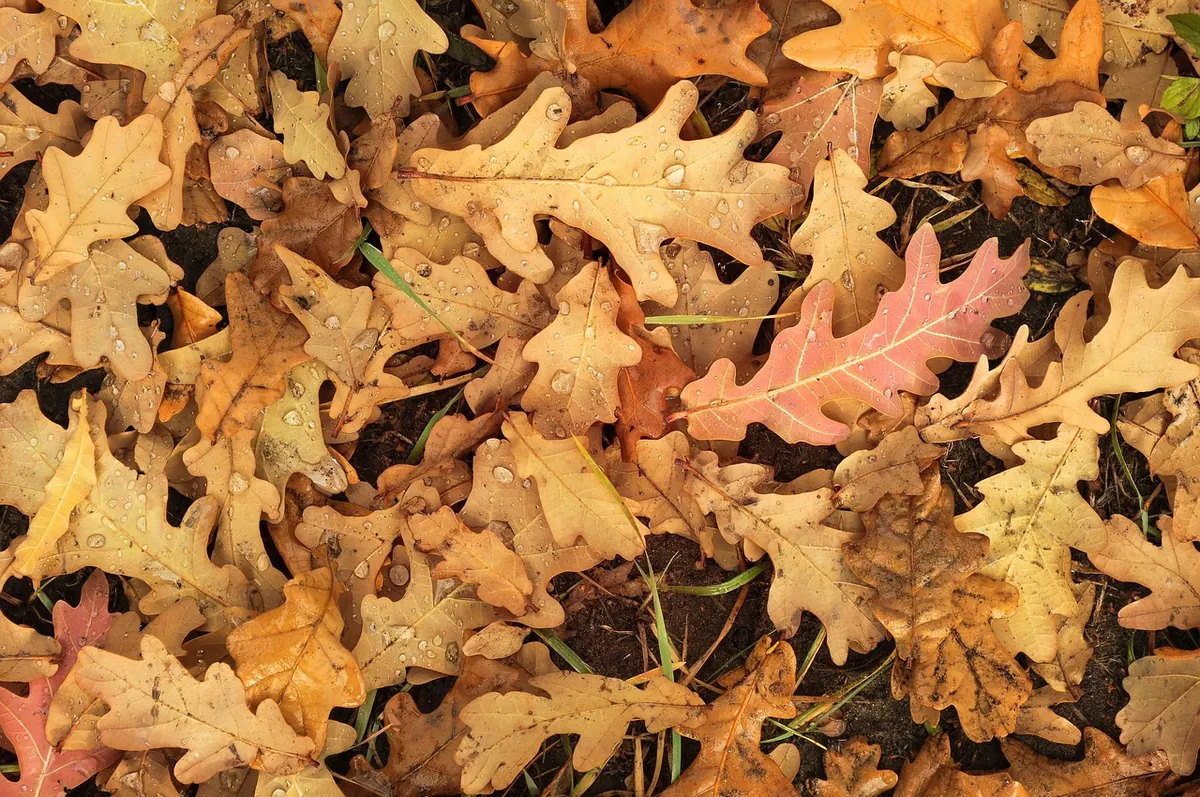
Beech deserves its own warning. In autumn, a thick layer of dry beech leaves on a wet descent is one of the more reliable ways to end up sitting down unexpectedly. Slow down, shorten your stride, and use poles if you have them.
Roots, Rock and the Line of the Trail
Broadleaved trees on thin soils often spread their roots sideways rather than down, and those roots cross trails at ankle height, polished smooth by decades of boots. On a dry day they are a nuisance; after rain they are a genuine hazard. Conifers tend to root more deeply, but shallow-rooted spruce on wet ground is famously prone to windthrow, which is why conifer woods after a storm often present a tangle of root plates and fallen trunks across the path.
Reading the ground is a skill, and it improves fast if you practise it deliberately:
- Look three or four steps ahead, not at your feet — you will see the root before you land on it.
- Treat any change of colour as a change of grip: grey rock, dark wet leaves, green moss on stone.
- On a descent through leaf litter, follow the outer edge of the trail where the litter is thinner.
- If the trail splits repeatedly in an open broadleaved wood, take the worn line and check your position sooner rather than later.
- In a conifer plantation, watch for drainage ditches: straight, deep and often hidden by branches.
Water, Mud and the Seasonal Calendar
Water behaves differently in each wood. A broadleaved floor with good leaf litter absorbs rain and releases it slowly, but lowland clay under oak and ash turns into boot-sucking mud by November and stays that way until spring. Conifer slopes tend to shed water faster, so trails there can turn into shallow channels — easier to walk than mud, harder on the ankles.
Snow and the spring thaw
Conifer branches intercept snowfall and hold it. The result is a thinner snowpack on the ground, more snow held up in the canopy, and a slower, later melt. Patches of old snow linger in spruce stands well into spring, often as hard icy lumps rather than soft slush. In a bare deciduous wood, snow reaches the ground more evenly, and south-facing slopes lose it fast in the first warm days. On a spring walk, expect the two woods to feel like different months.
Autumn and winter
October and November bring mast: acorns, beechnuts, chestnuts. Attractive to wildlife, unpleasant underfoot — chestnut husks in particular are spiny and best avoided in thin shoes. Winter strips the broadleaved wood of cover and gives you long sightlines; the conifer stand stays green and dark, which is exactly why deer, roe deer and birds use it heavily in cold weather.
Sound, Scent and the Wildlife You Notice
A broadleaved wood in May is loud. Leaves rustle, wind is audible, birdsong carries. Step into a spruce stand and the sound drops away; the needles swallow it, and you hear wind as a low roar high above instead. The smell changes just as sharply — resin, bark, damp needle litter.
Both are good places to look for tracks, but for different reasons. Snow in an open beech wood shows you a story clearly. In dense conifers you will see far less, so work the edges, clearings and forest roads instead. One thing stays the same everywhere: leaf litter, bracken and tall grass are tick habitat. Check yourself at the end of the day, and if a bite looks inflamed or you feel unwell afterwards, speak to a pharmacist or doctor rather than guessing.
Wind, Weather and Finding Your Way
A conifer belt makes a real windbreak; a broadleaved wood in winter offers almost none, because the leaves that stop the wind are on the ground. In summer that reverses in a small way — dappled broadleaf shade is pleasant and airy, while conifer shade is cold and still. Either way, take your rain break under a conifer and your lunch break in the sun.
Navigation is the other practical difference. Plantations are uniform: rows of the same species, the same height, few landmarks, and a strong tendency to look identical in every direction. Compass work is not optional there. Broadleaved woods give you more to work with — a big isolated oak, a coppice edge, a stone wall — even if the undergrowth makes the going slower.
Before You Set Out: A Short Checklist
You cannot always choose your wood, but you can adjust for it. A few habits cover most of the difference:
- Check which trees dominate your route and note where the forest changes type; the transitions are where the trail surface usually gets worst.
- Add half an hour of daylight under a closed conifer canopy, and pack the headlamp even in summer.
- In autumn leaf litter, take poles and allow more time for descents.
- In spring, expect lingering snow and ice in spruce stands and plan your footwear accordingly.
- Treat conifer plantations as compass terrain, and broadleaved woods as slow-going terrain.
- Look up once in a while — the canopy tells you where you are long before the ground does.
Walk both kinds of forest and you start to feel the change at the edge of a stand, a hundred metres before you can see it. That is not romance; it is simply experience telling you to shorten your stride, check the map, and enjoy how different two woods can be on the same small hill.
Photo: Dan Badiu / Pexels

How to Season Fallen Wood for Simple Woodland Crafts
A fallen branch can become a spoon, a hook or a walking stick, but only if it dries slowly and properly....
Autumn Leaf Litter: A Field Guide to What It Tells You
What fallen leaves reveal about tree species, soil moisture, fungal decay and the turning season — plus a...